
A schoolboy dream that came to life in a classroom three decades ago with the formation of the Microimage Hobbyist Club, Microimage has grown into company with a global footprint, empowering thousands of corporates and employees via its subsidiaries MiHCM and Futura.
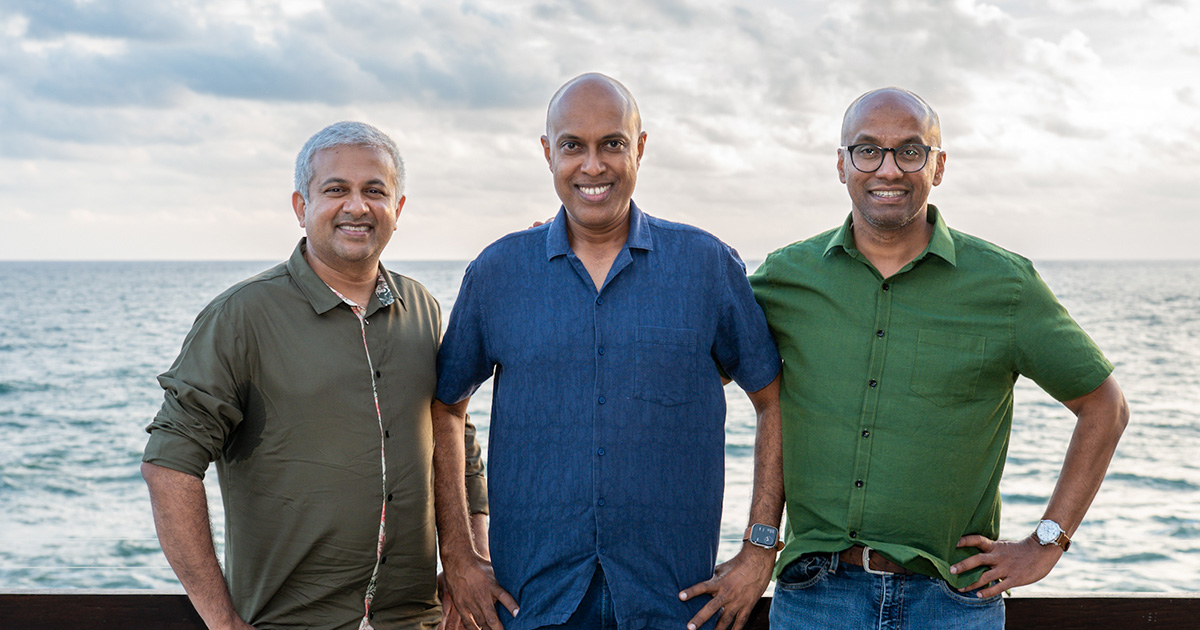
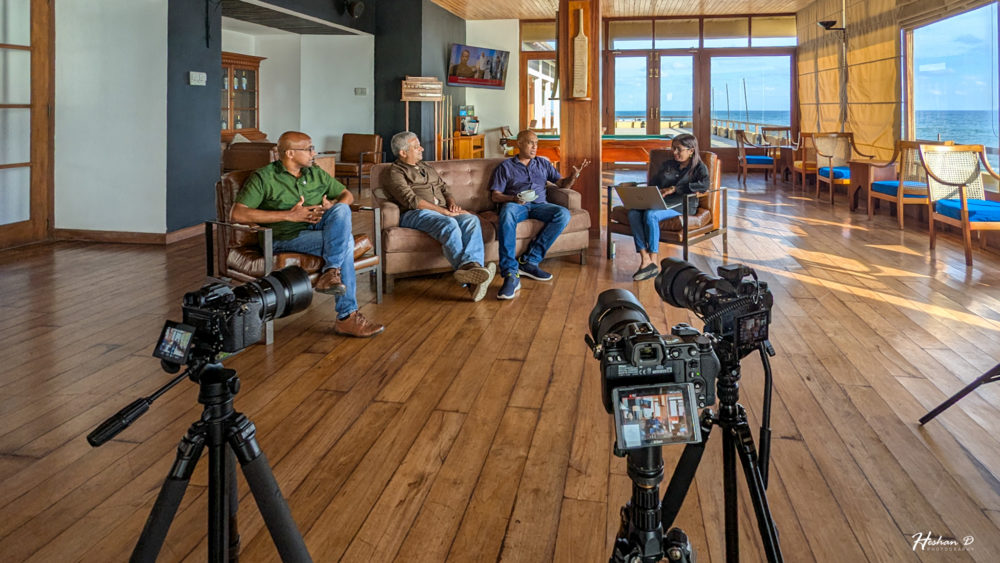
At Microimage’s 30th anniversary in 2025, Marianne David sat down with the Board – Director and Group CEO Harsha Purasinghe, Director and Chief Product Officer Suren Rupasinghe, and Director Damindu Jayaweera – to trace the origins of the company and its journey over the years.
Harsha, tell us about those early days. How did Microimage come about and why did you want to do this in the first place?
Harsha: At Ananda College, I became the President of the Computer Club in 1992 and in that process, I ended up meeting some phenomenal young people. Two of them are sitting next to me. There are a few others who were part of the Microimage Hobbyist Club in the early days but then subsequently went their own way – some migrated and some moved on to different things.
While I was the President of the College Computer Club, I felt it would be really cool to form a hobbies club. We were all crack programmers; I could code in four or five programming languages at that time. It was the DOS era, and I could write tools, virus scanners, games, and all kinds of stuff. At that time, together with Champika we wrote a bulletin board software.
We were all good in doing interesting programmes, so I thought it would be good if we all got together and formed a hobbies club so we could collectively do this. I can precisely remember when it happened: 24 December 1992, when two others – Dasun and Vidura – came over to spend the day at my house.
They are not part of this organisation anymore, but we were playing games and typing on my computer that day and suddenly I had the idea: ‘Why don’t we form a club, like, a fun hobbies club?’ Then we wanted to find a name.
We were all inspired by Microsoft at that time because most of the tools we used were Microsoft. Microsoft stands for microcomputer software, and we felt like the best name had been taken by Microsoft. There were various other interesting names, but we were so inspired by Microsoft, and we wanted something along the lines of microcomputer something, so that’s how we ended up with Microimage.
You were all still schoolboys when starting Microimage. Today Microimage is a global powerhouse that empowers thousands of people via its subsidiaries with its tech solutions. Is this the dream you dreamt?
Harsha: Not at all. Three of us formed the Microimage Club, then we wanted to get other good people into it, and we caught Damindu first. Subsequently a boy named Champika joined. The five of us comprised the original hobbies club [Harsha, Dasun, Vidura, Damindu, and Champika]. Suren joined later and by that time, we had formed our first partnership company. It was just a hobbies club, and we were doing some interesting software, including building our own games.
Damindu: We used to meet up at Dasun’s house to try and make video games. One person would do the graphics, another would do the animations, but obviously we never got anywhere. However, we did end up making some educational software, which was our first commercial transaction. We sold it to the National Institute of Education (NIE). That was my first Microimage pay cheque. They wrote cheques for each individual person. We didn’t have the company at that time, but the concept was there.
Harsha: Even though it was a club, we wanted to operate like a company since we were building our own cool software, so we put the Microimage brand into everything we were building.
Suren: There’s another cool thing I can still remember. We were younger than Harsha and were forbidden from coming to the Computer Club. Harsha was the one who told the teacher in charge that ‘these guys should be allowed to come in’.
Harsha: That was a rule initiated by the previous president and the team, that the Computer Club was restricted to Advanced Level students. But the smartest crack programmers, people who were so passionate about writing code, were all in the Ordinary Level classes and below.
I still remember how I made a public announcement in 1993 when we had the Ananda Education Fair, calling on whoever had written their own code and built something to come and see me at the Computer Club. Some had written so many pieces of interesting software, including students in Grade 6 or 7, and we featured all of them in our education software.
Those days when we went to other schools, we would typically see most of the computers playing games, but at our exhibition, it was all software built by us. I can proudly say that most of the software featured at that exhibition was powered by the team behind Microimage.
When Microimage was formed as a company, what was your first product?
Harsha: I was so addicted to computers and programming. I didn’t do my A/Ls well; I only got a few simple passes. Then my parents asked if I wanted to do A/Ls again. All my best friends went to Moratuwa University – I was the only one who couldn’t make it – but I was so good at writing code and so passionate about it. At that time Damindu was toying with Sinhala fonts with his father and they were about to migrate to France. They asked if I would like to take the product, modify it, and sell it in the market. That was in 1994.
Damindu: One of the funny things that happens in the world – and in our story as well – is that you get some external factors that play out which present an opportunity to do something. The thing that was happening at that time was, if you were a DOS user, everybody was slowly migrating to Windows. But if you wanted to do typography in Sinhala, the only option was to use as Mac, because only Mac had Sinhala fonts back then.
We were toying with taking those Mac fonts, changing the type, and then modifying them to work on the Windows platform. It was sort of working but my dad had this job, I was very young, just finishing my O/Ls, and I was about to migrate. I had been working with Harsha and the team trying to create a company with no product idea. But this product was there and there was a market with the transition from DOS to Windows adoption. I remember Harsha coming to our house one day and we signed some little paper.
Harsha: We had the Microimage Club. Damindu and uncle Jayaweera said, ‘We are migrating; would you like to take this over and give it a shot and do whatever it takes?’ so we signed a piece of paper. Those Sinhala fonts were called Damindu and Dasuni. I think the first customer was NIE because with our previous education software, we had connections with them.
We showcased these fonts to them, and they bought one copy for some NIE Centre in Badulla. To install that copy we had to go all the way to Badulla. Champika and I took a train there. That was my first train ride all the way to Badulla, and it was amazing. I was just 19 years old. We installed the software, trained that user, and came back the next day.
That’s how we started but the real breakthrough happened when we got an opportunity to showcase our Sinhala fonts at INFOTEL 1994. Even today INFOTEL is a big event. In 1994 there was a company called Sala Enterprises; I am pretty sure Chinthaka will watch this and be very proud of how he has grown and how we have grown.
Chinthaka had just returned to Sri Lanka, and he accidentally saw one of our executable exes, which talks about Microimage and the kind of things we do. He then reached out to me, and I showcased the fonts and asked if he would be able to distribute it. Then he said yes, he would love to. In exchange for a commission, we used Sala Enterprises as a retailer of our fonts.
He gave us a small space to showcase Sinhala fonts at INFOTEL. When we did that, so many people were interested in our product, and we ended up selling close to Rs. 3,00,000 to Rs. 400,000 worth of software. For someone who only had 50 bucks in his pocket, this was an amazing amount of cash.
That became our start-up capital. We used that money to formally register the company and do things properly. Subsequently we bought a brick-sized cellular phone and moved into a little office in Nugegoda. That’s how we started.
How did you go from Sinhala fonts to time and attendance and payroll – that’s a huge leap?
Harsha: That happened somewhere around 1997. In 1994 we set up Microimage as Microimage Computer Systems as a partnership company. We then decided to set up the company as a limited liability company, that’s how Microimage Pvt. Ltd. was born and our registration was on 20 September 1995 – today, 30 years ago.
In 1996, Suren had just finished A/Ls. It was only me and our first paid employee, Yohan – a childhood friend from my previous school, Wesley College. He was also a very good programmer, so I offered him a job to work for us for Rs. 5,000 and assembled a machine for him to work from his house.
Suren’s still in school or just out?
Suren: I still remember that day. It was the last day of my A/L exam. After the Physics paper, I came straight to the Nugegoda office and met Harsha. I remember there was a small fridge, and Harsha gave me a bottle of Coke.
So, Suren came over after his exam, sat down, and never looked back for 30 years?
Harsha: Thirty years later, he is sitting next to me! From that Coke to today.
What were you and Yohan doing in the office?
Harsha: It was a very interesting time. Yohan’s task was to build a keyboard driver for our Sinhala fonts. The product was very raw, and we wanted to nicely programme the Sinhala Wijesekara keyboard. That keyboard driver for Sinhala was the task Yohan was doing, while I was pretty much a salesman.
I was going to various Government ministries to lawyers to whoever interested in buying Sinhala fonts. I would travel by bus or train; subsequently I borrowed my father’s motorbike some days. I would go on the bike and install this software. Tuition masters would buy our software; those were the kind of people interested in it.
Later we hired a couple of people because we had some cash. They started selling Sinhala software as well – Sinhala fonts. Of course, we added two more fonts. Originally, we only had two fonts named Damindu and Dasuni; then Dasun joined after A/Ls as Suren joined. We added a font named Dasun and a font named Harsha.
Then Yohan managed to build this keyboard driver, and we also built a spellcheck and find and replace capability for the Word application, which was pretty cool stuff at that time for Windows 3.1.
So, what came next?
Harsha: You asked earlier how we ventured into time and attendance. In 1997, there was a gentleman named Ajith Jayasiri who worked for us. He was a university student from Sri Jayewardenepura. He was working on sales for us on commission while learning marketing, reading for a business degree. He said we needed to brand this and that’s how we thought through lots of names and came up with the brand Helawadana, which is how we then sold our Sinhala fonts.
One of our Helawadana customers, a manufacturing customer, wanted us to build a time and attendance software. We never wanted to do custom software, but we found that it was fascinating to build that software. We had to connect to a device which captures a barcode; employees would scan their timing using a barcode card and that data would join to a PC; we needed to process that information and generate the report.
Unfortunately, we took so long to build it since it was the first time we were building such software that by the time we finished it, the customer said, ‘We don’t want your software’ and pretty much threw us out completely. Then again, we didn’t give up – we had a beautiful piece of software.
We had some money since Helawadana was selling so we showcased this software at a trade exhibition organised by the National Chamber of Commerce. At that event an apparel manufacturer, Falcon Apparel owned by Akbar Group, saw the software which was beautifully designed and wanted to implement it. Falcon Apparel became our first customer and that’s how we ended up getting into time and attendance software. Subsequently the same customer wanted a payroll software.
That was the era when the ‘200 garment factories’ programme was formed and there were many manufacturers needing this software, so we rode that opportunity and got a phenomenal amount of business. This was from 1998 to the early 2000s.
Suren: That was the era when the whole world came up with this Y2K issue. We were on the verge of collapsing with all the software in 2000. Then here comes Windows software, which was millennium compliant. That was the greatest opportunity for us to ride the wave.
Harsha: We also had some interesting names at the time. Some MAS customers such as Unichela, Slimline, and Stretchline, and all became our customers, along with LM Apparel, LM Collection, Hirdaramani… We had garment companies all over the country using our software.
But you didn’t just stay there. Around that time, you started thinking of building web-based software. Why was that?
Harsha: We started this company because we always loved to code and build stuff. We were builders from our teenage days, and we thought it was so cool to build a web-based system.
You were the first in the country to do this?
Harsha: Yes, we were the first to build. We built an HR software although we didn’t know much about HR. But there was a girl working in our office from Jayewardenepura University who knew about HR software.
We did an employee profile – we already knew time and attendance and payroll – and the other basic stuff like transfers, promotions, and so on. We built it as a web-based system, and we absolutely started to sell it. Imagine these 20-year-old kids trying to go to some companies…
Our first customer became a ‘tiny’ telecommunication company called Dialog GSM. I still remember the head count – 300 people – in a small office run by a young man named Dr. Hans Wijayasuriya. That was the company that believed in us.
I remember how we and a global giant were in the final shortlist and the HR manager and the two IT managers at the time asked me, ‘What if this product fails?’ By this time, they had tried to implement another product and failed. This was another gamble.
The reason they liked our product was because it was web-based. They were setting up Dialog GSM offices across the country and they saw the interesting way of connecting people applying leave to a web interface compared to a client server interface, which was a thing of the past. They saw the future. Interesting their tagline is ‘The Future. Today.’ and they believed in a ‘future today’ sort of product.
I still remember they asked, ‘What if this doesn’t work?’ That was the final question thrown at me. I said, ‘Look, all I can say is, I will personally manage this project. I have been doing this since my teenage days. If this project fails, I will quit this industry; I don’t want to be in this industry if it fails.’ The HR lady, Jacqueline Lord, said, ‘I am going to write this down, so you better deliver.’
Suren: This was the era when most of the large conglomerates would reject even a meeting when Harsha would go to them; they would not even give us an appointment when we called.
Harsha: Actually, no one gave us appointments. Sometimes we’d go and meet the receptionist at the notable large groups. We would go to their doorsteps and talk to the receptionist and leave. I remember going to a particular bank where they laughed at us, like ‘who are these guys and what do they know about HR?’
Suren: They really didn’t believe in us, but we saw the potential of having the browser as the canvas for the next decade.
All of this was still very new, but all of you really believed in what you were doing?
Suren: Exactly.
Harsha: Absolutely, yes, we believed – because it was fascinating. Dialog went live; it was probably the first browser-based e-HR software; at that time, it was called e-HR. We felt so proud. People applying online and someone approving online; it was great stuff. After that we had a great reference, and we started selling to many customers.
And today you’re selling to over a thousand companies around the world?
Harsha: Of course, yes!
In the middle of all that, you focused on Unicode Sinhala. Who came up with that?
Harsha: The Sinhala fonts or Helawadana business was continuing as another product line and there were a couple of people driving that business even though our HR and time and attendance software business had taken off. The people who used to sell Helawadana were continuing to do so.
This was an era when there was a huge battle to establish Sinhala Unicode. That battle was led by late Professor Samaranayake, together with people like Professor Gihan Dias, Dr. Ruwan Weerasinghe, and people like us – young software companies. All of us were on one side and there was a prominent figure on the other side proposing a different approach to establish Sinhala.
It was a very interesting era. We wrote the first Sinhala keyboard driver in our office. Our current CTO Shan together with Professor Gihan Dias from the University of Moratuwa used to come to our office, sit together, and write the first Sinhala keyboard driver with the help of Microsoft in Redmond, because in that era – 2003 – Sriyan de Silva Wijeratne became the first Country Manager. One of the commitments at that time was to enable Sinhala across Windows so that everyone could use Sinhala, including the Government. We felt very proud.
We also worked with the Information and Communication Technology Agency (ICTA) at that time, and I can’t believe that a few decades later I became a Board member of ICTA. We wrote the first Sinhala Unicode keyboard driver on behalf of ICTA with Microsoft support for the Windows ecosystem.
From there you go to the world’s first local language messaging for feature phones, and you win global awards as well?
Harsha: We were so good at language stuff, especially with Shan, so we didn’t stop with Sinhala, we did Tamil as well. Shan is one of the most phenomenal linguistic tech persons we have. He is an amazing guy. I told Shan that this was the era where feature phones were proliferating and GSM was all over, so we should build the ability to talk to each other in our own language. That is how we built Sinhala and Tamil SMS for feature phones – not smartphones.
We even came up with our own patented phonetic typing mechanism, so the whole thing could be typed on a feature phone keypad very easily. This had not even been done in India at the time. We were the world’s first to do it and we subsequently did it for other Indic languages as well, like Hindi, Telegu, Kannada, Malayali, and even Divehi in Maldives, and we showcased this at the first-ever GSM Asia Innovation Awards, we became the winner and then we ended up at the World Awards in Barcelona, which is like the mobile Oscars. Presenting this product in front of all the judges was huge for us, a tiny company from Sri Lanka.
Damindu: We were sitting at a table with some of the other nominees. The team sitting next to us was the Amazon A9 search team. The search function you see on Amazon today that lets you search through all the Amazon products. They were there to win for innovation.
When we looked to the right there was a massive Silicon Valley company. I remember there was a lady from a company which had built an SMS-to-voice thing. You look at all these companies with funding worth millions from Silicon Valley and here’s Harsha going to the stage in Barcelona at the GSM Awards!
Harsha: It’s not only awards. Dialog and subsequently Etisalat at that time launched it and lots of people downloaded the application and started messaging with that product.
With all these wins going for you, from your web-based HR systems to your language-based wins, suddenly you go and launch a disaster warning system. How did that come about?
Harsha: The Disaster & Emergency Warning Network (DEWN) was a complete accident. It happened because of a catastrophic disaster – the tsunami in December 2004.
Just after that I was involved in voluntarily going down south, engaging in social support for people who were impacted. I did this for a good six months. While I was going to households, I still remember an elderly lady asking me, ‘If this happens again, how will we know?’ This was the first time we had even heard the word tsunami.
I started thinking, ‘Why can’t we use GSM?’ Then I spoke to Dr. Hans, who was the CEO of Dialog at the time, and I asked him, ‘Can we build something on GSM for this?’ Dr. Hans also likes to think big, and he said, ‘Why don’t you figure out a way to transition a feature phone into an alarm device?’
So, we built a Java application for feature phones and built a middleware platform. It became an interesting social innovation. This was not a commercial product; we wanted to solve the problem. It was a very interesting time: a software company, a leading telco, and Sri Lanka’s leading university for engineering – the University of Moratuwa – in collaboration built the Disaster & Emergency Warning Network.
Dialog had a research lab at the University of Moratuwa, led by Prof. Gihan’s wife, Dr. Dileeka Dias. It had some phenomenal engineers, and they built the hardware device. We built the middleware platform and software, and Dialog powered with the network.
We used some very cool network technologies. A lot of people didn’t know about cell broadcast at the time; it is a point to multipoint technology. We were one of the first to pioneer that for disaster emergency broadcast, using a newly discovered protocol called CAP – Common Alerting Protocol. We adapted CAP and built DEWN.
When we built DEWN, we didn’t have a Disaster Management Centre (DMC) in the country to donate this to. At that time the Ministry of Public Security, Law, and Order was the ministry which undertook this temporarily. Then in 2009, when the DMC was formed, we officially installed and implemented DEWN at the DMC and it is being used even today. Even this morning I got a message from the DMC through the DEWN platform. It was not a commercial product; it was a social innovation. We are implementing this in Haiti also.
Damindu: One of the threads with this story is that from time to time, because there is an amazing engineering team, the company does other products. If you look through its history, what now feels like random isn’t so.
For example, if you take Dialog, when it was first rolling out its network, one of the things that network rollout required was network performance monitoring, particularly for them to get their ISO certification. They looked at international products – for example, HP Open View, which costs a couple of million US dollars – and then they turned to us.
We had never done network monitoring, so we pitched the idea of how we can build a product – with no product. By then Harsha and team had got such credibility with Dialog, a forward-looking company, that Dialog said, ‘We know you don’t have a product; why don’t you build us a product? It would cost us millions of dollars if we were to buy it from HP.’
They said they would initially use it for 12 months and then switch to something bigger but ended up using it for quite a few years.
Speaking of broadcast, you then moved into broadcast solutions?
Harsha: It’s completely accidental again. This happened in 2003. While I was walking at the World Trade Centre, the Financial Controller of Asia Broadcasting Corporation (ABC), which is famed for Gold FM, Hiru FM, etc., accidentally met me. He used to work for an apparel factory before, which used to be one of our customers for time and attendance software.
He knew of our capabilities, and he said, ‘This is completely different, but can you build a radio software? My boss wants a radio software.’ We took on the challenge.
Damindu was working for us at the time, he was in Sri Lanka doing his master’s during that period. He said, ‘This is a fascinating area. I have some exposure to this software because of my father’s work at UNESCO.’ We ended up going and finding out how the DJs work, how the scheduling works, and a whole lot of other stuff, and that’s how mStudio was born.
It was [ABC Chairman] Rayynor’s brainchild. I don’t know what made him believe it, but he felt that this software could be built in Sri Lanka. He was a very tough person to deal with, but we delivered. He absolutely loved it, and it became the software that powered ABC broadcasting.
Subsequently he said, ‘You have to only let us use this,’ but a few years later when Maharaja also wanted the same software, we managed to somehow convince Rayynor. He has a very big business, and this is a tiny piece of software. I remember telling him, ‘We don’t do one-off software, and we don’t like to do projects. If we sell it to more radio stations, it will be ubiquitous, and you will benefit out of it.’
That’s how we ended up selling to other radio stations and today almost all the leading radio networks are powered by mStudio. Some of the Southeast Asian radio stations are also powered by mStudio.
Damindu: For me, what was one of the coolest things about this particular case, was that I felt the team had built a technology powerhouse that had credibility and exposure enough for someone like those guys to sign a contract with no product; to agree on pricing to deliver something that had never been built in Sri Lanka although we had no track record of it.
But they were willing to trust, because by then there was enough credibility behind this story, behind what was done for the customer. That trust, I think, is something that continues to this day.
Absolutely. You guys literally had no product and then you built something so amazing that the biggest names in Sri Lanka clearly wanted it and now it’s gone global as well. In 2007, Microimage formed two subsidiaries to focus on HR software separately and broadcast and digital software separately. Why did this happen and how did it happen?
Harsha: After the huge event in Barcelona, when we showcased our Sinhala software and all that, since we had built this software for other Indic language, Airtel, Aircel, Vodafone, all these Indian operators were very keen to rollout our product.
Since we had that opportunity, there were some venture companies talking to us. We didn’t know what venture was and how venture worked so when we talked to them, they would ask, ‘So what do you guys do? Are you a startup?’ We didn’t even know what a startup was. The only thing we knew was that we organically grew a company to that point.
We told them we were doing HR software, payroll software, Sinhala software, and this software, and they said, ‘You are all over the place. You have to be very clear on what you do.’ That day I remember we were flying back to France to Damindu’s house, and I said, ‘This is very confusing to people. We need to split this company. HR software is a very focused piece of software for a particular domain. We need to spin off the rest of the broadcast and digital IP.’
That’s how Microimage Mobile Media was formed. We moved all our non-HR IP into Microimage Mobile Media in 2007.
Seven years later, in 2014, suddenly you decide that you’re going to transition into a scalable global company and start MiHCM. Why?
Harsha: By then we had become very famous in the country because we kept winning awards. We were recipients of the Overall Award at the National Best Quality Software Awards (NBQSA) on four occasions. After winning again in 2008, we decided we would not participate again; there was no point because we had won four times.
We have also won many other awards, including the National Science Foundation Award with a grant. We won the GSM Asia Award, we got commended in Barcelona, we got the World Summit Award, so many awards… We were winning awards, and we had fame.
What we realised as we became mature was that we were like a lifestyle company. We were generating some revenue and profit, and we kept building various products, but growth was slow. We did not know how to scale. All those things were not very clear.
In 2013 I started another startup with their blessings. That was a pivotal moment. In 2012 we were doing a lot of mobile software. In fact, one of the most interesting projects was one we did in 2011 with a company called Etisalat based on an idea by its CEO Dumindra Ratnayake, which we executed to another level.
Dumi and I were having a chat, and he said, ‘Harsha, why don’t we do e-books on smartphones?’ that’s how Book Hub was born – Sri Lanka’s first-ever e-bookstore. Again, a product ahead of time. All the publishers were amazed. All the big publishers got together and wanted to put their books on Book Hub.
We built it on smartphone and when we launched it, it became a phenomenon – you’re reading books on a smartphone. But again, it was ahead of time, the experience wasn’t great, and Dumi had to move out of Etisalat. There were a lot of challenges.
By that time, Shan and a few others and I had a deeper understanding of how mobile worked. This was a time when smartphones were proliferating at a rate, starting with the iPhone phenomena and subsequently Android. We saw that people were bringing their smartphones to office, so this problem of bringing your own device was a big challenge. We felt it would be cool to build an opensource middleware platform which could control these devices. Enterprise mobility was a good opportunity.
One day I bumped into Sanjiva Weerawarana – the Founder of WSO2 and a computer scientist – and I shared this idea with him. He initially didn’t get it, but subsequently when Shan and I went and did a whiteboard and showed what we could do with it, he absolutely loved it and he said, ‘Let’s do it!’
Then we tried to do a Joint Venture (JV) company between Microimage and WSO2 but WSO2 was a funded startup, and its Board didn’t allow that kind of JV to take place. The Board had actually asked Sanjiva to hire me and do this within WSO2, but that didn’t work as well because I didn’t want to let go of the baby.
And your childhood friends?
Harsha: They said, ‘Why don’t you give it a shot?’ Suren was running the HR business. He was completely immersed in it, and he was doing a good job in selling and building the business, so I said, ‘Let me give it a shot.’ Sanjiva set up this thing called WSO2 Mobile, which Shan and I joined. That was one hell of a time.
In 2013, I was running three companies – Microimage, the HR business, of Suren was like the Chief Operating Officer; then Microimage Mobile Media; and WSO2 Mobile. Subsequently it became part of WSO2, selling WSO2 stuff as well.
It was a crazy time, from 2013 to 2014. I did it for around one-and-a-half years and then due to strategic reasons, when the WSO2 Board decided that they need to take WSO2 and make it part of the parent company, I felt that it was time for me to move out, and I exited.
During that period, I used to travel to the US quite often and attend Gartner events and I saw the whole digital eruption that was going to happen, which is here today and now at another level with AI.
In 2014, when I moved out, I didn’t want to play small. WSO2 also inspired me a lot. With its enterprise technology knowhow, I got a very good understanding of how enterprise technology worked. With all that, I told Suren and the team at the time, ‘Let’s not do another incremental upgrade to our product. Let’s build a platform which we can globally scale.’
We took about three years to build our new digital HR product. It was a cloud-first, mobile-first era, and social analytics was the other thing. With all this technology combined, there were great businesses emerging, like Uber and Airbnb, which were all leveraging this technology.
We used the same tech components, and we bet on Microsoft again. We started with Microsoft, and we continued to believe in the company. There was this cloud platform called Azure, so we built it on Azure, and after three years of engineering, in 2014 we unveiled Microimage HCM Cloud. That was the first name. But the Microimage name was long, it was a legacy, and we wanted to come up with a shorter name and a cool logo and that’s how MiHCM was born.
We also wanted to transition from a lifestyle company and go global and sell MiHCM across many markets. Another engineering accomplishment we wanted to achieve was to have one source code across all the customers. Previously we had 100 source codes for 100 different companies, and we were only in Sri Lanka. We had one or two customers in the Maldives and in a couple of other markets, but those were tiny operations.
With MiHCM, you know the story today – we are in 20 plus markets with over 1,000 customers. We are truly global.
Now it’s 2025. Thirty years later, with AI taking over the world as it were, what’s MiHCM going to do next, what are you looking at beyond this year?
Damindu: If you think about any instance over the last 30 years from the very first day to today, the thing I imagine when I close my eyes – even when we were having these sessions yesterday with product demos and other things – is this sudden enthusiasm from Shan, Harsha, Suren…
They get super excited with a piece of technology that’s going to change the world. It could be a piece of technology that we were building when the world was transitioning to Windows – that’s how we started our life – or a piece of technology where you can have these apps based on the web. The first time these guys were showing it to me, you could see the glint in their eyes.
The first time we were fully on Azure, when everyone was using this very modern architecture, Shan was just yapping away, and Harsha was excited about this single source code which could take over the world… With AI, you are now starting to get the same vibe when you are sitting around these guys. Every time they want to show you something, everybody’s excited.
The difference this time around is that it’s not a hobbyist club, which was the first transition. It’s not an undercapitalised small business as the case was when we were coming to the web era, it’s not a partially experienced team as it was when we embraced the cloud era and started to go to these new markets… It’s a very experienced team with depth to the talent but with the same enthusiasm for the AI era.
I think we all have to agree that AI will be a bigger disruptor than moving to Windows, moving to the web, or moving to the cloud. And I think, even in that disruption, the biggest disruption that will happen is to the information worker. People who have white collar jobs today will have to figure out what the future of work is going to be. And this platform will be whatever platform that solves whatever that future is going to be for those people.
You sound very confident and given the company’s track record, it’s certainly going to be another great journey.
Harsha: From those humble beginnings, today we are a multinational. We have five global offices – Malaysia, Bangladesh, Singapore, Pakistan, and Sri Lanka.
And you have new ones coming up?
Harsha: Yes. And we have people in Vietnam, Thailand, and Indonesia. I can’t believe how my hobby became a multi-million-dollar multinational.
As Damindu said very well, AI for me isn’t the most exciting time in tech because I’ve seen the DOS era, I’ve seen the Windows era, I’ve seen the mobile first, cloud first era, but the AI era is so mind-blowing and I’m actually transitioning myself to that teenage time, with that curiosity to explore and build even though we are not at that age anymore.
Damindu: There’s a difference between me and Harsha and Suren in that these guys are there day in and day out. When we were taking the team photo out there, while I was sitting for it, I could hear all the little chitchat in the background – some 100 people were there. There was sense of family.
I feel like, as you were articulating earlier, there are some jobs where people wake up and don’t feel like going to work because you feel like you are working for a company, for a job, for a salary. But there’s something special here that these guys have created by being there day in and day out that makes people fall in love with this thing that we are celebrating 30 years of.
I think it’s more than a company, which is quite wonderful, and a lot of credit has to go to Harsha for that.
Suren: Definitely.
Microimage milestones
Sinhala Fonts and the Early Digital Shift
Microimage began its journey with Sinhala fonts, INFOTEL participation, and the transition from DOS to Windows-based technology.
Time Attendance and Payroll Software
The company introduced Time Attendance and Payroll software, growing in parallel with Sri Lanka’s apparel industry boom.
Sri Lanka’s First Web-Based HRIS
Microimage moved from client/server systems to web-based HR technology, launching the first-ever web-based HRIS in Sri Lanka, with Dialog GSM as its first customer.
Birth of Sinhala Unicode in Sri Lanka
Microimage contributed to the development of Unicode Sinhala and the Windows keyboard driver, helping shape the future of local language computing in Sri Lanka.
Sinhala and Tamil SMS Innovation
Microimage pioneered Sinhala and Tamil SMS, recognised as the world’s first local language messaging solution for feature phones. The innovation won the GSMA Award in Asia and was commended in Barcelona, Spain.
Disaster and Emergency Warning Network
Microimage helped power the Disaster Management Centre’s early warning capabilities through DEWN, using GSM technology, cell broadcasting, and SMS.
Microimage Splits into Two Subsidiaries
Microimage split into two subsidiaries, allowing Microimage to focus on HR software while Futura focused on broadcast and digital technology.
Expansion into Video Solutions
The company built a video suite, extending its broadcast technology capabilities into video solutions.
The Birth of MiHCM
MiHCM was born as Microimage prepared to transition from a lifestyle company into a scalable global HR technology company.
Expansion into Southeast Asia
MiHCM expanded into Southeast Asia through a strategic partnership, strengthening its regional presence.
Cloud-First, Mobile-First Digital HR
MiHCM entered the cloud-first and mobile-first era, helping organisations embrace modern digital HR transformation.
Reimagining the Future in the AI Era
MiHCM continues to reimagine the future of work in the AI era, building on decades of innovation to shape what comes next.
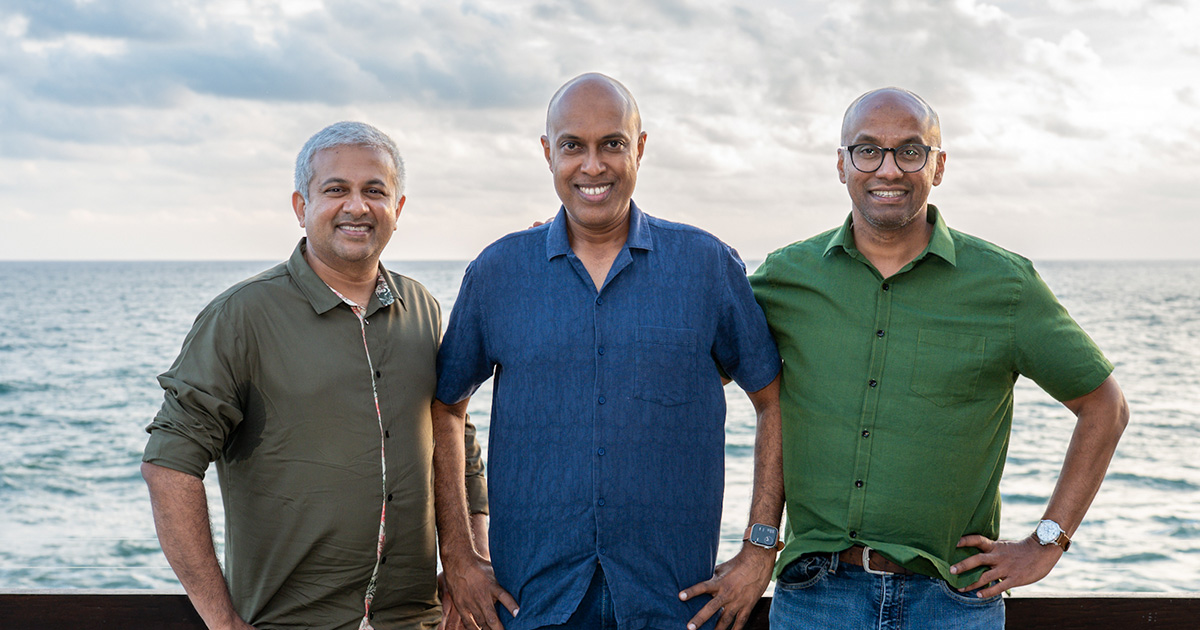
At Microimage’s 30th anniversary in 2025, Director and Group CEO Harsha Purasinghe, flanked by Director and Chief Product Officer Suren Rupasinghe (left) and Director Damindu Jayaweera (right)